Sustainability starts with everyday choices. It influences how we live, study, work, and care for the world around us.
The European Sustainable Development Week (ESDW) is a Europe-wide celebration of sustainability, bringing together people, organisations, and communities committed to creating a better future. This year, the University of Pardubice is joining the initiative for the fourth time.
Explore a diverse programme of inspiring talks, hands-on workshops, swap events, volunteer activities, and more. Get inspired, connect with like-minded people, and discover practical ways to make a positive impact both on campus and in your daily life.
Make Your Dorm Feel Like Home
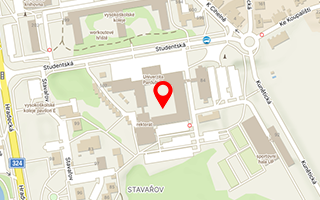
📍 Area between the Assembly Hall building and the Faculty of Chemical Technology
New room, new beginnings. Sew your own cushion and turn your room into a home away from home.
A creative workshop for students held as part of the Příliv event. Come and sew your own unique decorative cushion, meet new classmates, and transform your dorm room into a place where you will feel comfortable and at home.
The event is intended for students of the University of Pardubice.
Swap event
📍 HA Building, Area in Front of the Faculty of Chemical Technology Reception (1st Floor)
Give Things a Second Life. Find Something New for Yourself.
Do you have clothes, accessories, or books at home that you no longer use, but that could still bring joy to someone else? Bring them to the university swap event and exchange them for something that will make you happy.
A swap is a simple way to reduce unnecessary consumption, extend the lifespan of products, and support the principles of the circular economy. In addition to exchanging items, the event will offer inspiration for more sustainable consumption and provide an opportunity for students and staff from across the university to meet and connect.
Come and discover how much joy and inspiration can be found in items that might otherwise remain forgotten in a wardrobe or on a bookshelf.
The swap event may also include a guided tour of the Institute of Environmental and Chemical Engineering (IEnChE).
The event is open to students, employees of the University of Pardubice, and the general public.
Organised by the Rectorate / Centre for Sustainable Development in cooperation with the Faculty of Chemical Technology, EUROPE DIRECT Pardubice, and Na mysli, z.ú.

Faculty of Arts and Philosophy - Professional Lecture
📍online lecture: https://teams.microsoft.com/meet/387882594131496?p=MQWZ8tAmQUOuCe0byu
Eugenics, the pseudo-science of the ‘improvement’ of life, has gone through multiple transformations across its enduring lifespan. Recent literature emphasizes how eugenics is far from a pre-WWII phenomenon: it not only survived the war in ‘progressive’ forms that accompanied broader development ideas but is more recently making a comeback through new forms of science, technology and neo-illiberal movements and administrations. Related literature also shows how biodiversity conservation has been central to these transformations. In this paper, we bring these discussions together by reviewing the historical and contemporary connections between biodiversity conservation and the transformations of eugenics from the 19th century to the present. This allows us to add two crucial yet overlooked points that change how we think about conservation more generally. The first is how conservation, historically and currently, has often functioned as a ‘vanguard’ domain for experimenting with eugenical ideas and practices. We argue that this comes out most clearly in current forms of techno-driven conservation, which employs familiar social scientific arguments to pursue novel eugenical agendas. Second and unlike the 19th century, we argue that the current planetary ‘polycrisis’ moves eugenics from a concern with neoliberal ‘improvement’ of life to a focus on ‘sustaining’ certain forms life in the face of increasing disasters and threats of mass extinction. Here, eugenics should no longer primarily be understood as a form of illiberal, racist development, but rather as a form of neo-illiberal, biological ‘maintenance’. Eugenics, in short, is itself becoming a form of conservation.
Faculty of Restoration - Professional Lecture
📍The Assembly Hall of the Faculty of Restoration in Litomyšl
Over the last two decades, a number of new treatments with consolidating and protective functions have come into use for the conservation of mural paintings and stone artefacts, the latter, in particular, being of a carbonate nature. We are referring to methods involving ammonium oxalate, ammonium phosphate and nano-calcium-based formulations.
These complement better-known and established treatments, such as the barium hydroxide and ethyl silicate methods, and offer alternatives to the long-standing treatments still in use today, which employ organic polymeric products such as acrylics, polysiloxanes, etc.
The aim of the seminar at the Faculty of restoration, University of Pardubice is to summarise the principles on which these methods are based and to present a series of case studies with a focus on sustainable conservation.