Practical first steps after your arrival: where to live, how to open a bank account and how to start learning Czech.
You can stay in the University's halls of residence and studios on campus, or rent your own flat in Pardubice.
University dormitories and studios
Detailed information about the halls of residence: www.upce.cz/en/accommodation
Contact person
Petra Macháně
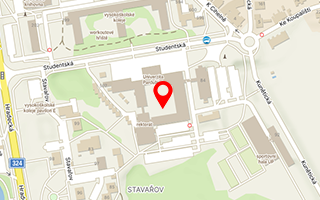
Accommodation Centre – Pavilion KB
E-mail: accommodation@upce.cz, petra.machane@upce.cz
Phone: +420 466 036 468
Need a proof of accommodation for your visa or residence permit application? Ask the Accommodation Centre at ubytovani@upce.cz (fee 100 CZK). See Proof of accommodation.
Renting your own flat
The International Office can put you in touch with English-speaking real estate agents. Do not hesitate to contact us.
Recommended websites (both in Czech and English):
- Bezrealitky.cz – one of the most professional and well-known websites for renting directly from owners, without a broker's fee.
- Sreality.cz – the most recognised website where real estate agents advertise flats and houses to rent or buy.
- Foreigners
Rental agreement
Once you find a flat, the rental agreement will probably be in Czech. The International Office can recommend a certified translator into English or other languages.
If you need the rental agreement for your visa or residence permit application, see Proof of accommodation.
Non-EU citizens in a private flat: if you do not stay in a hotel, the University dormitories or another accommodation facility, you must report your arrival to the Foreign Police yourself within 3 days of entering the Czech Republic. In hotels and dormitories, the accommodation provider does this for you.
Useful vocabulary for flat hunting
| Czech | English |
|---|---|
| Typ inzerátu | Type of advertisement |
| Nabídka – pronájem | Offer – rent |
| Nabídka – spolubydlení | Offer – shared flat |
| Typ nemovitosti | Type of property |
| Byt | Flat |
| Dům | House |
| Lokalita | Location |
| Garsoniéra | Studio (one-room flat) |
| 1+kk | One room + kitchenette |
| 1+1 | One room + separate kitchen (2+kk, 2+1 etc. follow the same pattern) |
Cash is still widely used for everyday purchases in the Czech Republic, but debit and credit cards – including contactless payments – are accepted in all supermarkets, at tourist attractions and in many restaurants.
Internet banking is common. Most employers pay wages directly to a Czech bank account, and many regular payments are made by direct debit. Czech people do not use cheques at all, but most banks recognise and redeem traveller's cheques.
Opening a bank account
You must be at least 18 to open a bank account. Some accounts (e.g. student accounts from age 15) can be opened earlier, but only in the presence of a parent or guardian.
What you need
- EU citizens usually need an identity document valid in the EU (ID card or passport) and a second document, such as a birth certificate, driving licence or Czech residence card.
- Non-EU citizens must present their passport as the main ID, sometimes together with their Czech residence permit, plus a further document (such as a birth certificate or driving licence).
- Banks always prefer documents with your photograph.
- For a student account, you also need a confirmation of your student status in the Czech Republic.
EU citizens are citizens of Austria, Belgium, Bulgaria, Croatia, Cyprus, the Czech Republic, Denmark, Estonia, Finland, France, Germany, Greece, Hungary, Ireland, Italy, Latvia, Lithuania, Luxembourg, Malta, the Netherlands, Poland, Portugal, Romania, Slovakia, Slovenia, Spain and Sweden. Citizens of Iceland, Liechtenstein, Norway and Switzerland have similar conditions.
Banks in Pardubice recommended for non-EU citizens
The following banks do not require a Czech residence permit to open an account:
UniCredit Bank
English website, quick procedure, English-speaking staff. You will need:
- Passport / ID card
- Certificate of residence in the Czech Republic
- Czech telephone number
ČSOB
English website, quick procedure. You will need:
- Passport / ID card
- Certificate of residence in the Czech Republic
- Czech telephone number (not mandatory)
ČSOB is one of the biggest Czech banks, so you will find a ČSOB ATM almost anywhere you go.
Note: Each bank has its own rules. What one bank accepts may be refused by another. It is best to go directly to the bank and work with them to open your account.
The International Office can accompany you to the bank and help you open your account.
Currency exchange
The best place to change money in Pardubice is the exchange office in Sladkovského Street. Look for the sign Směnárna (= exchange office). There is another exchange office in the Atrium Palác shopping mall in the city centre.
Learning even a little Czech will make your everyday life much easier. The University offers free Czech classes, and there are several affordable or free courses in Pardubice.
For a quick start, see Basic Czech: Pronunciation and Phrases – pronunciation tips, basic vocabulary and sentences for everyday life.
At the University
The International Office offers Czech classes free of charge for international PhD students, researchers and employees.
Sign up
Libuše Cermanová
E-mail: libuse.cermanova@upce.cz
In Pardubice
Many private schools and teachers in Pardubice offer Czech courses. The following institutions offer group courses for a reasonable price or free of charge.
PRO MOST
Czech courses for EU citizens.
- 17. listopadu 216, Pardubice
Web: mostpro.cz/english
Courses for beginners, intermediate and advanced students. Some courses prepare students for the Czech language exam required for permanent residence. Speak with the director to find a class that suits your needs.
Centre for Support of Integration of Foreigners
Centrum na podporu integrace cizinců
- Contact: Lenka Janošková
Pernerova 444, Pardubice
E-mail: ljanoskova@suz.cz, icpardubice@suz.cz
Phone: +420 466 989 228, mobile: +420 725 148 519
Web: integracnicentra.cz
Courses for beginners, intermediate and advanced students. The classes are free of charge. Call, e-mail or visit for more information.
Planning to apply for permanent residence? You will need a Czech language exam certificate. See Permanent Residence.
Czech pronunciation is relatively simple: letters generally sound the same whatever word they are in. There are a few exceptions, but unlike in English they follow fairly strict rules.
In this section:
Pronunciation
Most guidebooks give basic Czech vocabulary with an English phonetic transcription. That helps if you have the book in front of you – but if you plan to learn any Czech, start with proper pronunciation.
The Czech alphabet
a, á, b, c, č, d, ď, e, é, ě, f, g, h, ch, i, í, j, k, l, m, n, ň, o, ó, p, r, ř, s, š, t, ť, u, ú, ů, v, y, ý, z, ž
The letters q, w and x usually appear only in foreign words.
Vowels
Vowels are short (without an accent) or long (with an accent). Simply put, accented vowels sound the same as unaccented ones – you just hold them twice as long.
| Letter | Sounds like |
|---|---|
| a | 'ah' (as in bus) |
| e | 'eh' (as in red) |
| i | 'ee' (as in bee) |
| o | 'o' (as in hot) |
| u | 'oo' (as in book) |
| y | same as i |
| ě | 'ye' (as in yes) |
Consonants
These consonants sound the same as in English: b (bed), d (dog), f (film), g (game), h (hot), l (lit), m (meat), n (not), s (sad), v (van), z (zone).
k, p and t are almost the same as in English, just softer – never with the aspiration they may have in English.
| Letter | Sounds like |
|---|---|
| c | 'ts' (as in its) |
| č | 'ch' (as in cheese) |
| ch | 'kh' as in Scottish loch |
| j | 'y' (as in yes) |
| r | rolled 'rrr' (like the Spanish r) |
| ř | a rolled r combined with ž – 'rzh' |
| š | 'sh' (as in she) |
| ž | 'zh' (as in measure) |
| ď, ť, ň | softer versions of d, t, n – roughly 'dy', 'ty', 'ny'. Before ě or i they lose the hook but are pronounced the same (e.g. ti = 'tyi'). |
A few exceptions
- After m, the letter ě is pronounced 'nye' (mě = 'mnye').
- The double vowels au, eu and ou are pronounced fluidly as one sound; other pairs of vowels are pronounced with a very brief pause between them.
- Paired consonants – sometimes one consonant is written and its pair is pronounced: b→p, g→k, v→f, d→t, z→s, h→ch, ď→ť, ž→š. This happens at the end of a word (led sounds like 'let') or at the beginning of a consonant cluster that ends with a voiceless consonant (vstup sounds like 'fstup'). It also works the other way round (kdo sounds like 'gdo'). The only exception: if the cluster ends in v, there is no change. Don't worry – the pairs sound so similar that people will understand you even if you don't switch them.
Basic vocabulary
Once you've got the pronunciation down, here are some words and phrases you'll likely need to get around town.
| English | Czech | Pronunciation |
|---|---|---|
| Social interaction | ||
| Yes | Ano | Ah-no |
| No | Ne | Neh |
| Greetings | ||
| Good morning | Dobré ráno | Do-breh rah-no |
| Good day (formal hello) | Dobrý den | Do-bree dehn |
| Hello (informal) | Ahoj | Ahoy |
| Good evening | Dobrý večer | Do-bree veh-chehr |
| Goodbye (formal) | Na shledanou | Nah skhleh-dah-noh |
| Goodbye (informal) | Čau | Chow |
| Good night | Dobrou noc | Do-broh nots |
| Meeting people | ||
| Nice to meet you | Těší mě | Tye-shee mnye |
| How are you? (formal) | Jak se máte? | Yak seh mah-teh |
| How are you? (informal) | Jak se máš? | Yak seh mahsh |
| I'm well | Mám se dobře | Mahm seh dob-rzheh |
| What is your name? | Jak se jmenujete? | Yak seh ymeh-noo-yeh-teh |
| My name is… | Jmenuji se… | Ymeh-noo-yee seh |
| Communication | ||
| Do you speak English? | Mluvíte anglicky? | Mloo-vee-teh ahn-glits-kee |
| I don't speak Czech | Nemluvím česky | Neh-mloo-veem ches-kee |
| I don't understand | Nerozumím | Neh-ro-zoo-meem |
| Excuse me / Sorry | Promiňte | Pro-meen-yuh-teh |
| Thank you | Děkuji | Dye-koo-yee |
| Please / You're welcome | Prosím | Pro-seem |
| Cheers (to your health) | Na zdraví | Nah zdrah-vee |
| I want to speak Czech | Chci mluvit česky | Khtsee mloo-veet ches-kee |
| Restaurant | ||
| How much is it? | Kolik to stojí? | Ko-leek to sto-yee |
| The bill, please | Účet, prosím | Oo-cheht, pro-seem |
| Enjoy your meal | Dobrou chuť | Do-broh khooty |
| Cheese | Sýr | Seer |
| Bread | Chléb | Khlehp |
| Beer | Pivo | Pee-vo |
| Wine | Víno | Vee-no |
| Water | Voda | Vo-dah |
| Getting around | ||
| Where is the…? | Kde je…? | Gdeh yeh |
| Toilet | Toaleta | To-ah-leh-tah |
| Restaurant | Restaurace | Res-tau-rah-tseh |
| Shop | Obchod | Op-khot |
| Street | Ulice | Oo-lee-tseh |
| Police | Policie | Po-lee-tsee-yeh |
| Hospital | Nemocnice | Neh-mots-nyee-tseh |
| Train station | Nádraží | Nah-drah-zhee |
| Airport | Letiště | Leh-tyish-tyeh |
| Emergencies | ||
| Help! | Pomoc! | Po-mots |
| Fire! | Hoří! | Ho-rzhee |
| Thief! | Zloděj! | Zlo-dyey |
More useful phrases
Where a phrase differs for men and women, the female form is given in brackets.
Transport
| English | Czech |
|---|---|
| Where is the bus station / bus stop? | Kde je autobusové nádraží / autobusová zastávka? |
| Where is the train station? | Kde je vlakové nádraží? |
| Where is the metro station? | Kde je stanice metra? |
| Where can I buy tickets? | Kde si můžu koupit jízdenku? |
| Next stop: Náměstí Republiky | Příští zastávka: Náměstí Republiky |
| What is the rate per kilometre? | Jaká je sazba za kilometr? |
| Please stop here. | Prosím, zastavte tady. |
Directions
| English | Czech |
|---|---|
| Excuse me, where is the theatre? | Prosím vás, kde je divadlo? |
| Turn right / left. | Zahněte doprava / doleva. |
| How far is it? | Jak je to daleko? |
Accommodation
| English | Czech |
|---|---|
| I would like a single room. | Prosil (Prosila) bych jednolůžkový pokoj. |
| I would like a double room. | Prosil (Prosila) bych dvoulůžkový pokoj. |
| I would like a room for one night. | Chtěl (Chtěla) bych pokoj na jednu noc. |
| I would like a room for two nights. | Chtěl (Chtěla) bych pokoj na dvě noci. |
| How much is a double room? | Kolik stojí dvoulůžkový pokoj? |
Sightseeing
| English | Czech |
|---|---|
| Where is the town square? | Kde je náměstí? |
| Do you have a map of the city? | Máte mapu města? |
| Do you have any brochures / guidebooks in English? | Máte nějaké brožury / průvodce v angličtině? |
At the bank
| English | Czech |
|---|---|
| Where is a bank? | Kde je banka? |
| I need to exchange money. | Potřebuji si vyměnit peníze. |
| What is your commission? | Jakou účtujete provizi? |
| Where is a cash machine (ATM)? | Kde je bankomat? |
Eating out
| English | Czech |
|---|---|
| What will you have? | Co si dáte? |
| I'll have… | Dám si… |
| I'll have a beer, please. | Dám si jedno pivo, prosím. |
| The bill, please! (We'd like to pay) | Zaplatíme! |
Emergencies
| English | Czech |
|---|---|
| Help! | Pomoc! |
| Fire! | Hoří! |
| Thief! | Zloděj! |
| Call an ambulance / a doctor! | Zavolejte sanitku / doktora! |
| Call the police! | Zavolejte policii! |
| Where is the police station? | Kde je policejní stanice? |
| I have lost my passport / bag. | Ztratil (Ztratila) jsem pas / tašku. |
See also emergency phone numbers.
At the doctor's
| English | Czech |
|---|---|
| I'm not feeling well. | Není mi dobře. |
| I have a headache. | Bolí mě hlava. |
| I have a stomach ache. | Bolí mě břicho. |
| I have a sore throat. | Bolí mě v krku. |
| I have a fever. | Mám horečku. |
| It hurts here. | Bolí mě tady. |
Online dictionaries and phrasebooks
- Slovník Seznam.cz – a great online dictionary
- MyCzechRepublic.com – Czech phrases
Want to learn more? See Czech Language Courses.