Published: 21.01.2026
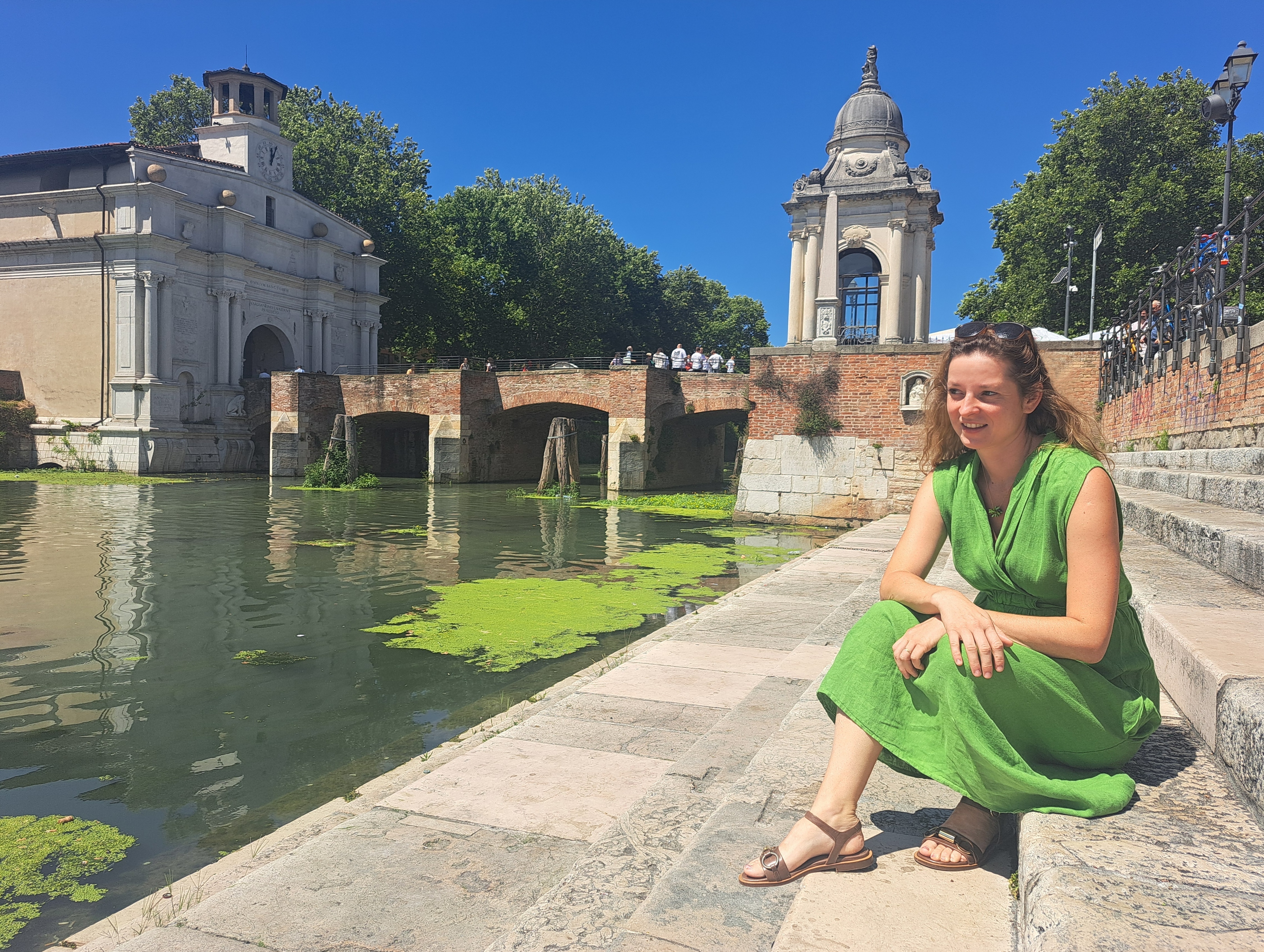
Italy has long been intertwined with her life. Even during her studies, she was interested in the influence of Italian art on Czech art. Now, restorer Veronika Knedlíková Wanková is researching how the perception of art has changed at the University of Padua.
Can everyone perceive art?
I think everyone can do it in their own way. Some people just don’t know how to talk about it. They can’t express exactly what they feel because it’s complicated for them. However, we always experience some kind of feeling, whether negative or positive. Art can surprise us or, conversely, we may find something about it disturbing. A person’s perception of a painting may also depend on their mood. When looking at a negative image – for example, a severed head – but feeling in a good mood because they just bought an ice cream, they may not find the image cruel and may perceive it as beautiful. But if they are depressed, not doing very well, and don’t know what to do with their life, the same image may intensify their current state of mind and evoke negative feelings or evaluations. How we perceive our aesthetic experiences in the brain and which centres are activated during their processing is the subject of a rapidly developing field called neuroaesthetics.
Can such findings be used in the creation of exhibitions?
Definitely. Today's visitors often want activities that are not too complicated. It is therefore a great advantage to know how people approach a work of art and how they perceive it. Exhibitions can capitalise on this knowledge. For example, you can work more with light, incorporate various lighting effects, or create an exhibition that primarily features round or curved elements, because we know that viewers prefer them. This approach can help people develop a relationship with art and deepen their communication with it. Works that are just stored in a gallery and no one looks at are simply lost.
Is there a big difference between how a layman and an expert perceive a work of art?
According to the latest findings in psychology, we know that there is. When an uninformed viewer approaches a work of art, they perceive it based on their feelings. It can activate memory centres, causing them to recall a specific situation that reminds them of the same feeling. This celebration in the garden is like it used to be... They recall a particular experience that makes them appreciate the painting. For people who are not burdened with knowledge of the field, emotions are easier to examine. Unlike us experts, they do not worry about it being “correct” and why a particular motif is depicted in this way when it would have looked completely different at that time.
Is it harder to attract people to art today?
It’s hard to compare. In the past, a single painting in a church was a rarity. The world was visually cleaner. Today, we are inundated with images of all kinds, and our brains process one image after another very quickly. It is more challenging to capture people’s attention. When an exhibition opens, attendance is often perceived as a sign of a certain social status, so I attend because everyone else is, and I want to show that I am also educated. Then there is the group that is genuinely interested in art, but it is not that large. And then, there are the rest of the potential visitors who are not interested in art, and we need to work with them and try to appeal to their interests.
So how does one find their way to art?
Probably by visiting galleries and museums. It is essential to focus on children from an early age and provide them with opportunities to engage with art. Various creative programmes, workshops, and art-focused summer camps are important. It is essential to realise that you don’t need to be an expert, but you do need to have a relationship with art and understand why it is important to you. Researchers at the University of Rome, studying the influence of art on emotions, concluded that after visiting a gallery, a family’s overall emotional state improved, and everyone was immediately in a better mood. Other studies also show that art is vital for a person’s mental well-being. Therefore, its greater connection with therapeutic centres or involvement in the study of depression is being considered. The connection between art and the study of the human psyche, therefore, has greater potential than we can currently foresee.
Can art appeal to me even as an adult?
It definitely can. It is important not to be afraid of art and to try visiting different types of exhibitions. There are events such as the Venice Biennale, where everyone can find something that interests them. Various installations are very popular, even in outdoor spaces. Street art is a highly effective strategy for attracting young people to the arts. In Padua, there is a map of imaginative murals, i.e., large-scale paintings on walls in public spaces, where you can take photos and share them. Contemporary art gives us freedom, which should make it attractive to us.
What was the last exhibition you went to?
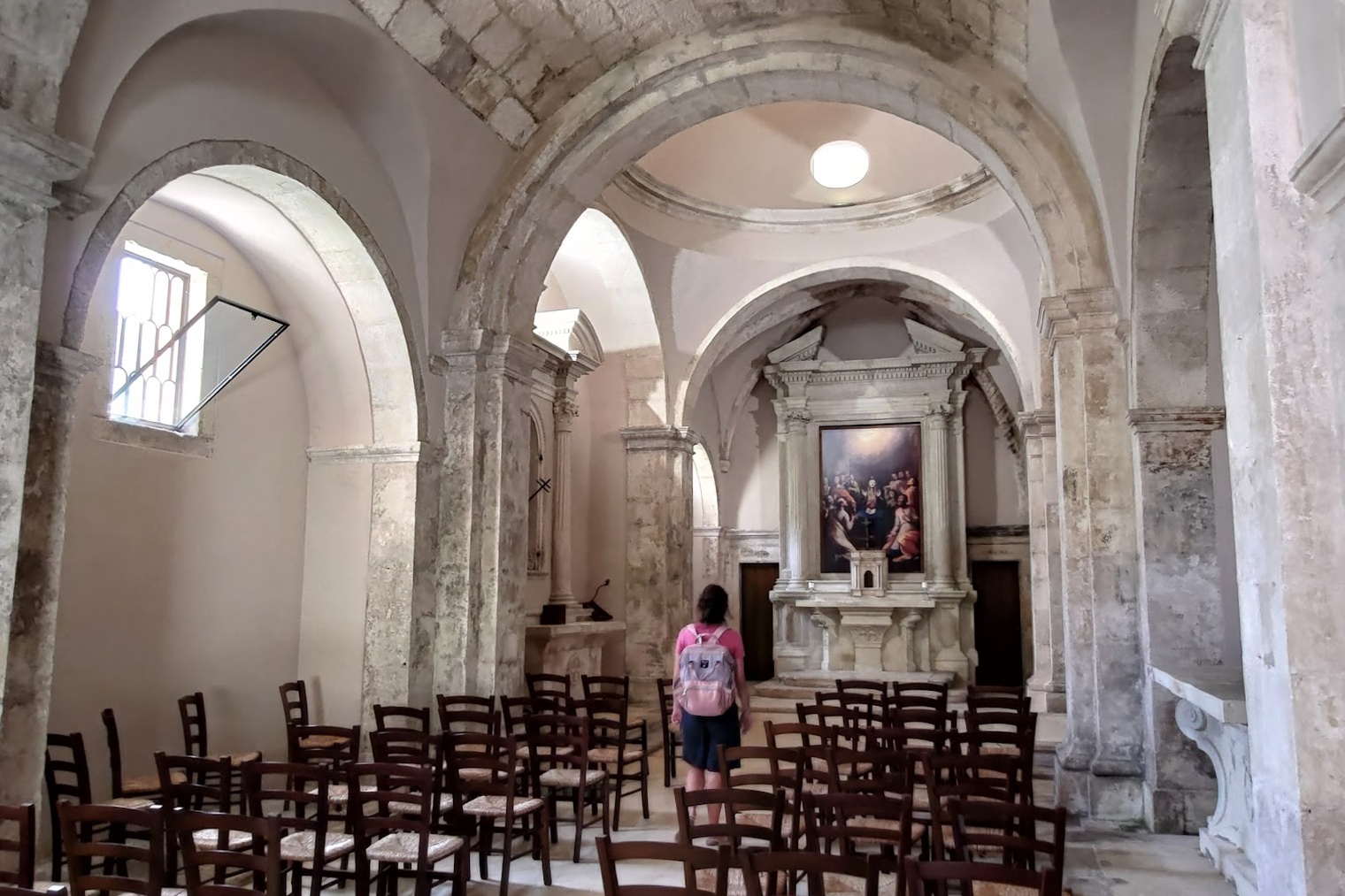
I was in Venice at an exhibition on the depiction of the human body in the 16th century, so there were drawings by Leonardo da Vinci, for example. I really enjoy attending exhibitions, but it’s very time-consuming for me, as I would always prefer to visit each one twice. First, I examine the works themselves, and then, the second time, I read the accompanying texts or use an audio guide. I struggle to focus on the artwork and absorb additional information at the same time.
What are you doing in Italy?
I have my own research project there. Because of it, I got a position at the University of Padua, which is nothing short of a miracle. (laughs) The Italian university environment is highly competitive, and there are limited opportunities for young researchers, making it challenging to secure a place.
What is your project about?
I’ve always been interested in the Italian influences on Czech art, especially at the end of the 16th century, which hasn’t been studied extensively. Works created in the Czech lands were considered of lesser quality and therefore uninteresting, while the Italians who came to the country significantly elevated the local culture. I realised that even if the painting was not of high quality, it still hung somewhere in a remote village church and was probably of great importance to the locals. And so, I came up with the idea of researching how people actually perceive a work of art and what value it has for them. I then developed this idea into my project and approached a professor at the University of Padua who specialises in the psychology of art perception. I asked him if he would be my supervisor, and he agreed. My project ultimately received funding.
Is that why you’re now working at the psychology department?
With the project approved, I secured a great job as an assistant professor there. I have three years to work on my project, titled ‘A Miracle: From Mind to Canvas and Back.’ I'm really looking forward to it.
Does your favourite Italian-Czech artistic thread come into play in the project?
Yes, it’s research into intercultural communication. Artists from the Czech lands travelled to Italy in the 16th century, stayed there, studied, and then returned with the knowledge they had acquired. I’m interested in how their travels transformed art and how they were reflected in the perception of “ordinary” people, what they appreciated in the paintings. I’m looking for records of these feelings in the archives. They may have mentioned that it was a beautiful painting they saw somewhere on their travels, that it seemed very vivid to them, or that it reminded them of something – these are precisely the valuable impressions that art brings to people. And so are the various emotions it evokes in them.
Are you also interested in the views of people today?
As part of the psychological component of the project, we are developing a specialised questionnaire that will assess whether and how paintings affect us today and what emotions they evoke in us. We are interested, for example, in whether we appreciate realistic scenes more, or, on the contrary, if the scenes are rather emotional, even expressive ones, and whether we can describe them. The questionnaire will be administered to people in both Italy and the Czech Republic. We also want to find out whether the Czechs prefer art in the Czech Republic and the Italians in Italy. We assume that thanks to today’s interconnectedness of cultures, we will no longer see this difference between countries. On the contrary, we may find out whether we react more positively to expressive scenes, for example, because they have a strong effect on us and evoke clear emotions.
How did you end up in Italy?
I have to blame my husband for that. Almost seven years ago, he wanted to continue his scientific career with a postdoctoral fellowship, so he looked for a suitable place and discovered Padua. I didn’t know the city very well, unlike Venice or Florence, where I had spent some time during my master’s studies. That’s how I learned Italian. So, I immediately agreed to the move. We had a six-month-old son, with whom I was on maternity leave, and the opportunity to live in my favourite country, Italy, presented itself, so there was no reason to hesitate. Moreover, shortly after arriving in Italy, I had an unexpected job offer.
Tell us about this interesting offer?
Shortly after moving, a colleague from the Faculty of Restoration contacted me. She had been awarded a research project on Renaissance stucco. She asked me if I would like to get involved, as I had been working on the stucco decoration at Bučovice Castle, which even resulted in a publication called ‘Perla Moravy’ (‘Pearl of Moravia’). So, I was very tempted to continue working on this topic.
From Italy?
Yes, it was about deepening my knowledge from my previous research. So, working remotely didn’t bother me at all. I didn’t have to physically be in Bučovice, as I had already done that in the past. (laughs) The faculty was in no hurry for the results, and it was up to me to decide if and how I could juggle everything. Of course, I took it as a challenge, so I went for it.
And you could stay in the field even during maternity leave, and even in Italy …
Yes, I realised that I couldn’t just stay at home with my son, that I had to do something “of my own”. I got a small job at the National Gallery in Prague and did restoration work at home. Maintaining a genuine connection with works of art remains very important to me today.
Who supplied you with works of art at that time?
One art collector had me restore a large part of the estate of the painter Anna Zemánková. She was an artist who ranks among the world’s most renowned creators, and her work has been exhibited in Venice, New York, Paris, and other locations. The paintings, created on paper, depict various floral compositions, often rendered in embroidery or relief. The artist liked to use a combination of different techniques and materials. This diversity suited me perfectly when restoring her works.
Do you still do restoration work?
I have less time for restoration now, which I regret. Since I restore items at home, I’m limited to working on simpler projects. In any case, I would like to revisit it in the future. I enjoy challenges and appreciate the entire restoration process, particularly the opportunity to keep the work in good condition. Moreover, I am delighted when someone else enjoys my work.
How do you like living in Padua?
Padua is a great place to live. It’s very green, has good public transportation, and is home to a university, making it quite lively. It’s more authentic, and you can really experience typical Italian life here. It’s a city that doesn’t primarily live off tourism, and you can really tell. There are no crowds of tourists, and even a regular coffee costs a normal price. Of course, everyone who comes to visit us must see Venice. Nothing can compare to it.
Is there anything that surprised you in Italy?
How strictly the siesta is observed here. It starts around 1:30 p.m. and ends at 4:00 p.m. Fortunately, it’s not an issue at work, unlike at home, where we live. There, you’re supposed to be really quiet, ideally resting, and definitely not doing any noisy household chores, such as vacuuming. According to our Italian neighbours, you’re not supposed to do anything at all during this time.
Are you planning to return home?
Our plan has always been to return. We originally planned to spend two years in Italy, but we’ve been here for six years now and have another three years ahead of us. It’s hard to say if we’ll want to move, because our older son has started school here. But we visit the Czech Republic quite regularly. This autumn, I will be giving a lecture at the Faculty of Restoration. I believe it’s very important for today’s students to be in regular contact with art, to understand it from different perspectives, and to be aware of the process that accompanies its creation. Plus, it’s beneficial to hear someone else discuss it. Passing on knowledge and ideas makes a great deal of sense to me.
TEXT Zuzana Paulusová : PHOTOS Veronika Knedlíková Wanková’s archive
This text is available in the exclusive edition of the University of Pardubice magazine MY UPCE, in both print and online versions.